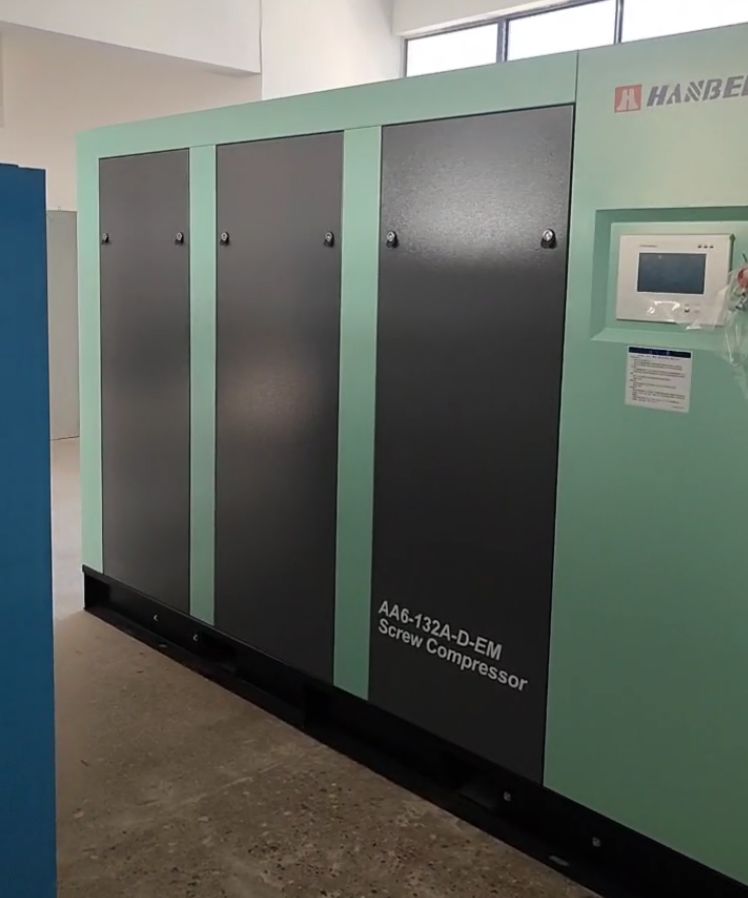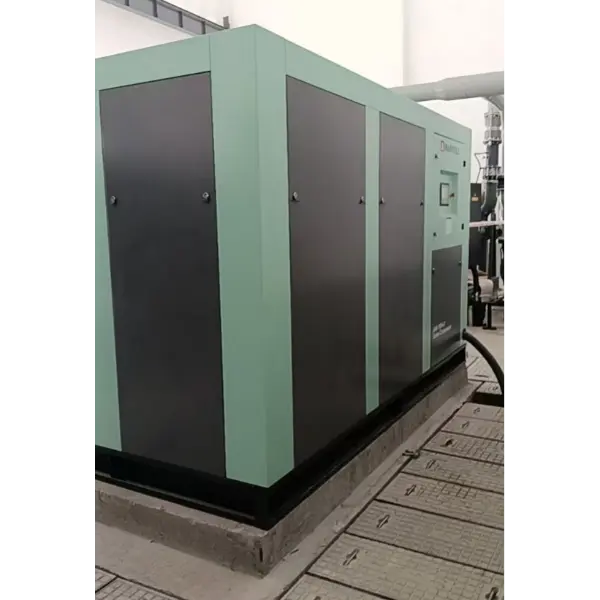
Optimizing Industrial Efficiency: The Easy-Maintainable Two-Stage Permanent Magnet Variable Frequency Air Compressor
1.introduction
Compressed air is widely recognized as the "fourth utility" in industrial manufacturing, accounting for approximately 10–15% of total industrial electricity consumption worldwide. Despite its ubiquity, conventional single-stage screw compressors operate with considerable energy losses attributable to high compression ratios, internal leakage, and inefficient load control strategies (typically load/unload or inlet modulation). The emergence of two-stage permanent magnet variable frequency compressors has fundamentally transformed the compressed air landscape, offering energy savings of up to 50% under fluctuating demand conditions while dramatically improving reliability and ease of maintenance—two critical considerations in industrial operations where downtime directly impacts productivity, profitability, and operational continuity.
This article presents a comprehensive technical review of the easy-maintainable two-stage PM VFD air compressor, analyzing how the synergistic combination of two-stage compression, permanent magnet motor technology, and intelligent variable frequency drive creates a system that is not only exceptionally energy-efficient but also engineered for simplified maintenance, extended service intervals, and reduced lifecycle costs.
2. Technical Architecture and Operating Principles
2.1 Two-Stage Compression Design
The foundational innovation of this compressor type lies in its two-stage compression architecture. Unlike single-stage compressors that compress air from atmospheric pressure to final discharge pressure in a single step, two-stage systems divide the compression process into two distinct stages with inter-stage cooling between them.
Compression Ratio Distribution:
For a single-stage compressor operating at a discharge pressure of 0.8 MPa (gauge), the absolute compression ratio is approximately 8:1. A two-stage compressor operating at the same discharge pressure distributes this overall ratio across two stages, with each stage operating at roughly the square root of the total ratio—approximately 2.8:1 per stage (absolute). This dramatic reduction in per-stage compression ratio delivers multiple tangible benefits:
-
Reduced Internal Leakage: Lower pressure differentials across each stage minimize air leakage through rotor clearances and blow-holes, substantially improving volumetric efficiency
-
Extended Bearing Life: Bearing loads are reduced to approximately one-third of those experienced in single-stage designs, significantly prolonging bearing service life
-
Lower Operating Temperatures: Each stage operates at considerably lower discharge temperatures than a single-stage unit, reducing thermal stress on all mechanical components
-
Extended Lubricant Life: Lower operating temperatures slow oil oxidation and thermal degradation, extending oil change intervals and reducing oil consumption
-
Reduced Rotor Deflection: Lower pressure loads minimize rotor bending and deflection, preserving optimal clearances over longer periods
Inter-Stage Cooling:
Between the low-pressure (LP) and high-pressure (HP) stages, an inter-cooler removes the heat of compression generated in the first stage. This cooling process reduces the specific volume of the air entering the second stage, thereby decreasing the work required for the second-stage compression. The thermodynamic benefit is substantial: two-stage compression with inter-cooling approximates isothermal compression more closely than single-stage compression, resulting in approximately 12–18% more air output per unit of power input compared to equivalent single-stage compressors operating at the same discharge pressure.
2.2 Permanent Magnet Synchronous Motor
The permanent magnet (PM) motor constitutes the second technological pillar of this system. Unlike conventional induction motors that rely on rotor currents induced by stator fields, PM motors incorporate rare-earth permanent magnets embedded in the rotor, eliminating the need for excitation current and eliminating rotor slip losses entirely.
Key Performance Advantages:
-
IE5 Ultra-Premium Efficiency: PM synchronous motors achieve full-load efficiency levels of 95–97%, outperforming standard IE3 induction motors by 5–10 percentage points across the entire operating range
-
Near-Unity Power Factor: Operating at a power factor of 0.95–0.99, PM motors significantly reduce reactive power demand, improving overall power system efficiency and reducing distribution losses
-
Superior Torque at Low Speeds: PM motors maintain high torque output even at significantly reduced speeds—a critical characteristic for variable frequency operation where the motor must deliver adequate torque across a wide speed range
-
Compact Footprint: Higher power density results in a motor that is approximately 30–40% smaller and lighter than equivalent induction motors, reducing overall system footprint
-
Lower Temperature Rise: Motor winding temperature rise typically remains below 60 K, extending insulation system life and protecting bearing lubricants from thermal degradation
Oil-Cooled Motor Configuration:
Many modern two-stage PM compressors feature oil-cooled permanent magnet motors, wherein the compressor's lubricating oil is circulated through cooling channels within the motor housing. This integrated cooling approach offers multiple advantages: it maintains optimal motor operating temperature under all conditions, reduces radiated noise levels, eliminates the need for separate external cooling fans, and simplifies overall system packaging.
2.3 Variable Frequency Drive (VFD) System
The variable frequency drive (VFD) enables precise, real-time control of motor speed to match compressed air supply with demand. This capability is fundamental to achieving maximum energy savings, particularly in applications with fluctuating air consumption patterns, and also contributes to reduced maintenance requirements through soft-start and reduced mechanical stress.
Operational Speed Range:
Modern systems support continuous speed modulation from 25% to 100% of rated speed, with some advanced platforms achieving 40–100% continuous modulation. At periods of low demand, the compressor reduces speed rather than cycling on and off or operating in unloaded condition—eliminating the substantial energy waste associated with unloaded operation (typically 30–50% of full-load power) and preventing the high inrush currents and mechanical shock of frequent starting.
PID Control Algorithm:
Advanced PID (Proportional-Integral-Derivative) control algorithms maintain discharge pressure within tight tolerances—typically ±0.01 MPa (±0.1 bar). This precise pressure control delivers two distinct benefits: it directly saves energy (each 0.01 MPa reduction in system pressure typically yields 6–7% energy savings), and it eliminates "artificial demand" caused by pressure fluctuations that lead end-users to consume more compressed air than actually required.
Soft-Start Benefits:
VFD-controlled motors employ a ramped start profile, gradually accelerating from zero to operating speed over a programmed duration. This approach eliminates the high inrush currents (typically 6–8 times full-load current) associated with direct-on-line starting, reducing stress on electrical distribution systems, switchgear, and all mechanical drivetrain components, thereby contributing directly to extended equipment life and reduced maintenance requirements.
3. Easy-Maintainable Design Features
3.1 Reduced Maintenance Frequency and Cost
The "easy-maintainable" characterization of two-stage PM VFD compressors stems from multiple design factors that collectively reduce both the frequency and complexity of required maintenance activities.
Extended Service Intervals:
The reduced operating temperatures and lower bearing loads inherent to two-stage compression translate directly into extended maintenance intervals. All critical consumables—including air intake filters, oil filters, lubricating oil, and oil separator elements—exhibit significantly longer service lives compared to single-stage counterparts operating under equivalent conditions.
| Maintenance Parameter | Single-Stage Fixed-Speed (Typical) | Two-Stage PM VFD | Improvement |
|---|---|---|---|
| Bearing service life | Baseline | Up to 3× longer | +200% |
| Oil change interval | ~2,000 operating hours | Significantly extended | +100–150% |
| Separator element life | Standard | Extended | +50–100% |
| Annual maintenance cost | Baseline | Reduction of ~30% | –30% |
Lower Failure Rates:
The balanced load distribution across two compression stages ensures that no single component bears excessive mechanical or thermal stress. Each rotor set operates at substantially lower pressure differentials than in a single-stage machine, significantly reducing the risk of mechanical failure. This inherent reliability translates directly to fewer unscheduled maintenance events, reduced emergency service calls, and less unplanned downtime—all of which are critical to maintaining production continuity in industrial environments.
Extended Compressor Longevity:
Industry data from major compressor manufacturers indicates that the two-stage architecture, combined with permanent magnet motor technology, extends the service life of the airend (compressor block) by a factor of 1.5–2× compared to single-stage units operating under comparable duty cycles. The use of split-type construction with coupling connections between the motor and airend further facilitates major service operations by allowing individual component servicing without complete system disassembly.
3.2 Simplified Maintenance Procedures
Modular Component Architecture:
Modern two-stage PM VFD compressors are designed with modular construction principles that provide unrestricted access to key serviceable components. The split-type design, wherein the motor and airend are connected via a flexible coupling rather than integrated into a single housing, enables independent servicing or replacement of either component without disassembling the entire system—a significant advantage during major overhauls.
Quick-Connect Service Points:
Leading models incorporate quick-connect fittings at all critical service points, including oil sampling ports, filter housings, and drain connections. These features enable faster, cleaner, and more reliable filter changes, oil sampling, and condensate drainage, reducing the time required for routine maintenance tasks and minimizing the risk of contamination during service procedures.
Intelligent Diagnostic Systems:
Advanced touchscreen control panels with real-time monitoring and diagnostic capabilities provide operators with immediate visibility into system performance and health status. These intelligent controllers deliver:
-
Real-time display of pressure, temperature, current draw, and power consumption
-
Fault warnings with specific diagnostic codes for rapid troubleshooting
-
Filter life tracking with predictive service notifications
-
Remote monitoring capability (via optional IoT modules) for off-site diagnostic support
-
Historical data logging for trend analysis and predictive maintenance planning
Automatic Maintenance Alerts:
The control system can be programmed to generate maintenance alerts based on actual operating hours, load profile, or cumulative runtime, rather than arbitrary calendar intervals. This condition-based maintenance approach ensures that service is performed only when actually needed—preventing both premature service (wasting consumables and labor) and overdue service (risking component failure and unplanned downtime).
3.3 Simplified Consumables Management
The reduced compression ratio of two-stage systems results in lower oil carryover rates and reduced oil degradation rates, which significantly simplifies oil management.
Key Consumables Advantages:
-
Cleaner Lubricant: Lower operating temperatures reduce oil oxidation and thermal degradation, extending oil service life and maintaining lubricating properties for longer periods
-
Superior Oil-Gas Separation: High-efficiency oil-gas separation systems achieve discharge oil carryover of ≤3 ppm (with some advanced systems achieving ≤1 ppm), substantially reducing oil consumption and protecting downstream equipment from oil contamination
-
Lower Overall Oil Consumption: The combination of efficient separation and reduced oil degradation dramatically lowers total oil consumption over the equipment lifetime, reducing both material costs and disposal requirements
-
Standardized Consumables: Many models employ industry-standard filters and lubricants that are widely available from multiple suppliers, simplifying inventory management and reducing the risk of using incorrect or incompatible consumables
3.4 Reduced Noise and Vibration
Although not strictly a maintenance parameter, the lower noise and vibration levels characteristic of two-stage PM VFD compressors contribute indirectly to ease of maintenance. Reduced vibration transmission minimizes loosening of fasteners and connections, while lower noise levels improve the working environment for maintenance personnel. The typical noise level of modern two-stage PM VFD compressors is approximately 68–72 dB(A) at 1 meter, representing a substantial reduction compared to conventional single-stage units.
4. Energy Efficiency and Economic Benefits
4.1 Energy Savings Overview
The economic case for two-stage PM VFD compressors is exceptionally compelling. Compared to conventional fixed-speed single-stage compressors operating under equivalent duty conditions, these systems deliver energy savings of 25–35%, with some installations reporting savings of up to 50% depending on the specific load profile and operating conditions.
| Comparison Scenario | Typical Energy Savings |
|---|---|
| Two-stage PM VFD vs. Single-stage fixed-speed | 25–35% |
| Two-stage PM VFD vs. Single-stage VFD | 10–18% |
| Two-stage PM VFD vs. Conventional industrial frequency | Up to 40–50% |
Annual Savings Illustration:
Based on 8,000 operating hours per year and an average industrial electricity tariff of USD 0.10–0.12/kWh (varies by region), a 132 kW two-stage PM VFD compressor can save approximately USD 30,000–50,000 annually compared to conventional single-stage fixed-speed units. These savings are even more pronounced in regions with higher electricity costs. Most installations achieve payback periods of 1.5–2.5 years, with total lifecycle cost savings of 20–30% over a 10-year operating horizon.
4.2 Part-Load Efficiency Advantage
One of the most significant advantages of PM VFD technology is its exceptional part-load efficiency. Fixed-speed compressors operating in load/unload mode consume approximately 30–50% of full-load power even during unloaded periods—consuming energy while producing no useful compressed air. VFD-controlled PM compressors, by contrast, reduce motor speed in proportion to demand, with power consumption following an approximate cubic relationship with speed:
-
At 80% speed, power consumption ≈ 80%³ = 51% of full-load power
-
At 60% speed, power consumption ≈ 60%³ = 22% of full-load power
-
At 50% speed, power consumption ≈ 50%³ = 12.5% of full-load power
This speed-dependent power characteristic ensures that the compressor operates at or near maximum efficiency across a wide range of output conditions, delivering substantial energy savings in applications with variable or partial-load operation.
4.3 Lifecycle Cost Analysis
From a total lifecycle cost (LCC) perspective, the advantages of two-stage PM VFD compressors become even more pronounced:
-
Initial Capital Investment: Slightly higher than conventional equipment (typically 15–25% premium)
-
Energy Costs (70–80% of LCC): Substantially reduced due to superior efficiency across all operating conditions
-
Maintenance Costs (10–15% of LCC): Approximately 30% lower than single-stage fixed-speed systems
-
Total Lifecycle Cost: 20–30% lower over a 10-year operating period compared to conventional solutions
5. Application Scenarios and Selection Guidelines
5.1 Target Industries
Two-stage PM VFD compressors are applicable across a wide range of industrial sectors:
-
General Manufacturing: Automotive and parts manufacturing, machinery processing, electronics assembly
-
Textile and Fiber: Jet loom applications, synthetic fiber production
-
Chemical and Pharmaceutical: Process air, instrument air supply
-
Food and Beverage: Bottling, packaging, material conveying
-
Data Centers and Electronics: Precision instrument air supply
-
Mining and Metallurgy: Pneumatic tools, instrument air
-
Metal Processing: Laser cutting, plasma cutting, pneumatic controls
These compressors are particularly well-suited for applications with significant demand fluctuations, where pressure stability requirements are stringent, and where ease of maintenance and reliability are prioritized.
5.2 Key Selection Criteria
Discharge Pressure: Select based on actual end-use pressure requirements, taking into account piping pressure drop. Avoid oversizing pressure (each 0.01 MPa over-specification increases energy consumption by approximately 6–7%).
Flow Capacity: Evaluate both average demand and peak demand profiles. Variable speed compressors are particularly beneficial where average demand is significantly lower than peak demand.
Control System: Prioritize models with advanced PID control, integrated data logging, and optional IoT connectivity for remote monitoring and fleet management.
After-Sales Support: Evaluate manufacturer service network coverage, spare parts availability, and technical support responsiveness.
Installation Environment: Consider ambient temperature, altitude, and available space—higher altitudes derate compressor output and require derating adjustments.
The easy-maintainable two-stage permanent magnet variable frequency air compressor represents a significant evolution in industrial compressed air technology. Through the synergistic integration of two-stage compression, permanent magnet synchronous motor, and intelligent variable frequency drive, this system achieves an exceptional balance of energy efficiency, operational reliability, and maintenance convenience.
Summary of Core Advantages:
-
Substantial Energy Savings: 25–35% energy reduction compared to conventional single-stage fixed-speed units, with up to 50% savings in certain operating conditions
-
Ease of Maintenance: Modular design, approximately 30% lower maintenance costs, intelligent diagnostic systems with automatic service alerts, and simplified consumables management
-
Superior Reliability: Bearing life extended to up to 3× that of conventional designs, significantly lower failure rates due to reduced mechanical and thermal stress
-
Stable and Clean Operation: Low noise and vibration levels, precise pressure control to within ±0.01 MPa, and extremely low oil carryover (≤3 ppm)
-
Rapid Investment Recovery: Payback periods typically 1.5–2.5 years, with total lifecycle cost reductions of 20–30% compared to conventional solutions
-
Environmental Benefits: Reduced carbon footprint through energy conservation and extended equipment life reducing material consumption
As industrial sustainability requirements and energy cost pressures continue to intensify, the easy-maintainable two-stage PM VFD air compressor represents the optimal technology choice for both new installations and retrofit projects. For industrial enterprises pursuing operational excellence through reduced energy consumption, minimized downtime, and simplified maintenance operations, this technology platform delivers a compelling value proposition that will only strengthen as energy costs continue to rise and environmental regulations become more stringent.
Related News
- How Air Conditioning Screw Compressor Technology Supports Low-Carbon Cooling
- Why Does Compressed Air Demand Fluctuation Affect Compressor Selection?
- Variable Frequency Screw Air Compressor: How Energy-Saving Technology Is Changing Industrial Compressed Air Systems
- Why Two stage Compression Variable Frequency Screw Air Compressors Are Changing the Game
- The "Dual-Core" Era of Compressed Air: Why Two-Stage PM VFD Compressors Are Becoming the Energy-Saving Gold Standard
- Integrated Variable Frequency Screw Air Compressor: Transforming Compressed Air from a Cost Center into a Profit Driver
Leave me a message