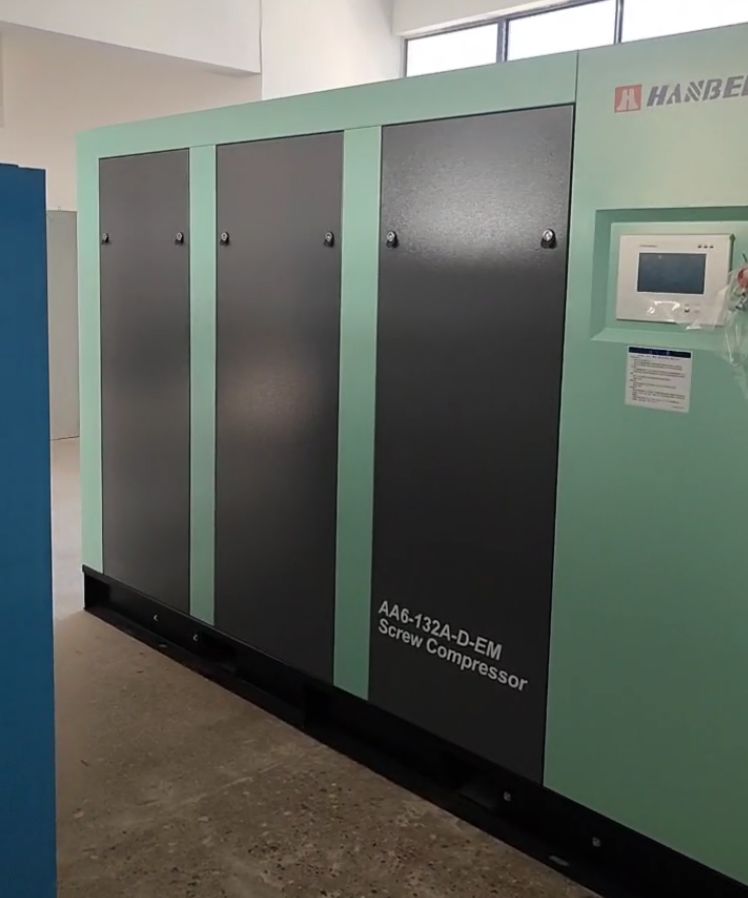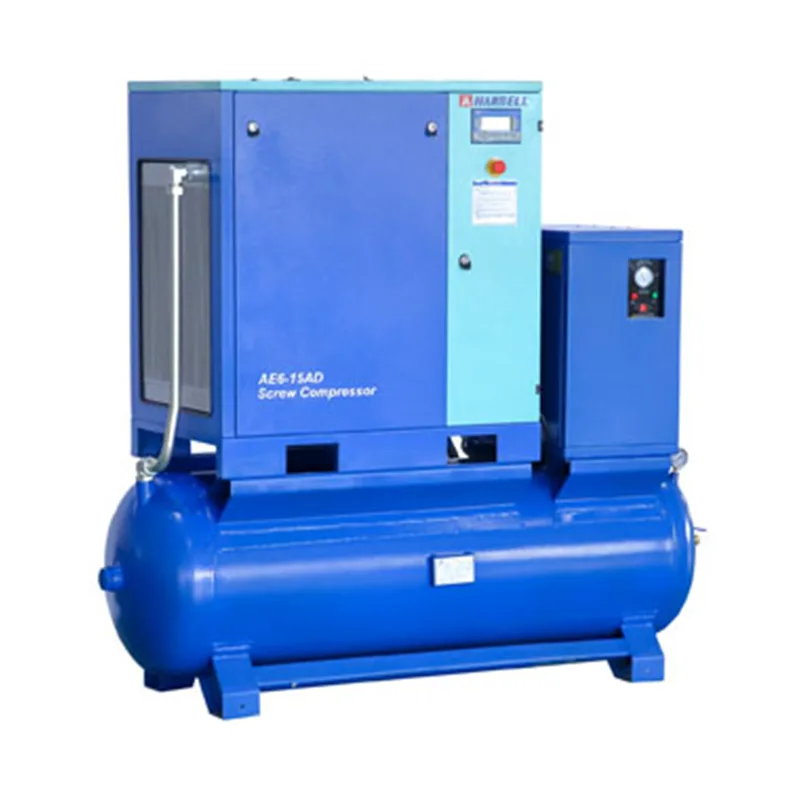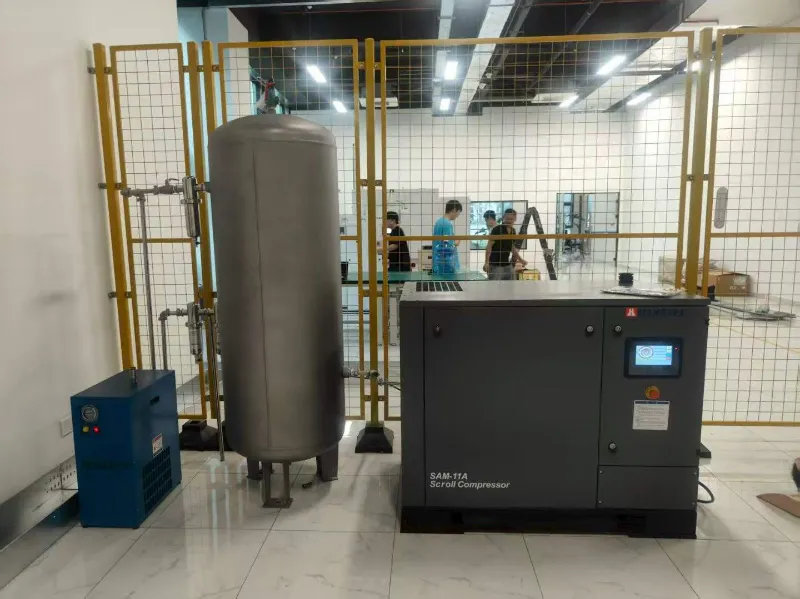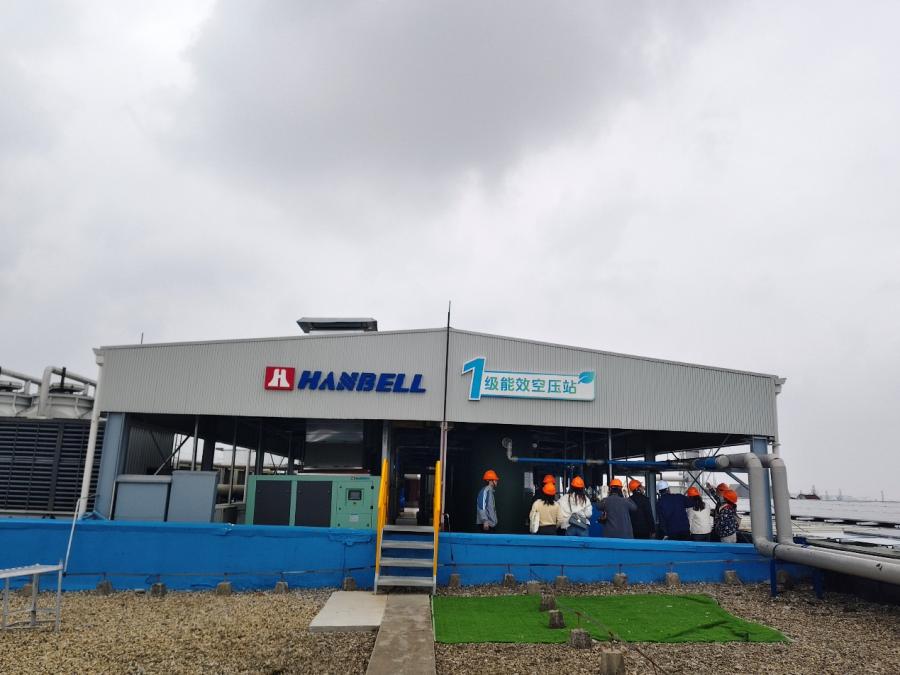
The Real Cost-Saving Math: How Two-Stage Permanent Magnet Variable Frequency Screw Air Compressors Cut Your Electricity Bill
In today's manufacturing landscape, where profit margins are razor-thin, the compressed air system is often the most overlooked "electricity bill black hole" on the factory floor. Many procurement managers fixate on the purchase price, unaware that the annual electricity wasted by an inefficient air compressor could buy an entirely new machine.
If your workshop is still running single-stage fixed-speed compressors, the following math is worth three minutes of your time.

How the Old System Was Burning Money
Traditional single-stage fixed-speed compressors have two inherent flaws that show up directly on your utility bill:
1. Unloaded Operation – Running Without Producing
Fixed-speed machines regulate pressure through "load/unload" cycles. When air demand fluctuates, the compressor frequently enters unloaded state—the motor keeps spinning but produces zero compressed air. Industry benchmarks indicate that fixed-speed compressors typically operate at 15%–25% unloaded time. That electricity is paid for but delivers zero output.
2. High Pressure Band Operation – Every Extra Bar Costs Real Money
To ensure adequate pressure at end-use points, fixed-speed machines are typically set to run within a wide pressure band, often fluctuating by 0.5–1 bar. Compressed air systems consume 6%–7% more energy for every 1 bar increase in pressure. Those "extra" pressure bars represent real money spent on nothing but waste.
Where the Savings Come From with the New System

Two-stage permanent magnet variable frequency compressors eliminate waste through two distinct mechanisms:
Mechanism 1: Thermodynamic Optimization – Reducing Internal Leakage Losses
Single-stage compression raises pressure from 0.1 MPa to 0.8 MPa in one step—a compression ratio of 8:1. The high pressure differential across the screw rotor gap causes significant internal leakage. Two-stage compression splits the ratio in half, with each stage operating at approximately 2.8:1. This drastically reduces internal leakage at each stage.
Industry‑accepted engineering data shows that at the same power input, two-stage compression delivers 10%–15% more free air delivery (FAD) than single-stage compression.
What this means in practice: you may be able to replace an older, larger machine with a new, smaller‑power two-stage unit—without increasing capital expenditure—while cutting electricity consumption substantially.
Mechanism 2: Permanent Magnet Variable Frequency – Eliminating Unloaded Run and Over‑Pressurization
-
VFD eliminates unloaded operation: produces only as much air as needed, completely removing no‑load energy waste.
-
Precise pressure control: maintains pressure within ±0.01 MPa, avoiding the 0.5–1 bar pressure band swings of fixed‑speed machines.
-
IE5 ultra‑premium permanent magnet motor: maintains over 95% efficiency across the entire speed range, whereas induction motors typically achieve only 88%–92%.

A Simple, Reliable Calculation Method You Can Do Yourself
Rather than relying on vendors' promotional case studies, you can calculate your own potential savings using site‑measured data. This is the same methodology used by energy auditors and is fully compliant with GB 19153‑2019 "Energy efficiency grades for volumetric air compressors."
Step 1: Calculate Your Current Specific Power
Gather two real‑world measurements from your existing compressor:
-
Total input power (kW): read from the motor meter or VFD display
-
Actual free air delivery (m³/min): measure with a flow meter, or estimate by derating the nameplate capacity based on equipment age and maintenance history
Current Specific Power (SP) = Total Input Power ÷ Actual FAD (kW/(m³/min))
Example: A 250 kW fixed‑speed single‑stage compressor with a nameplate capacity of 42 m³/min. After years of operation, rotor clearance has increased and internal leakage has worsened; actual measured output is only 35 m³/min.
Current SP = 250 ÷ 35 = 7.14 kW/(m³/min) — this falls into China's Grade 3 (least efficient) energy rating.
Step 2: Look Up the Grade 1 Benchmark
Refer to GB 19153‑2019. For your specific discharge pressure and power rating, find the Grade 1 (most efficient) specific power limit.
For air‑cooled, 8 bar, 250 kW‑class screw compressors, the Grade 1 specific power is typically ≤ 6.0 kW/(m³/min).
Step 3: Calculate Annual Electricity Savings
Annual Savings (kWh) = (Current SP − Grade 1 SP) × Actual FAD × Annual Operating Hours
Using the example above:
-
Current SP: 7.14 kW/(m³/min)
-
Grade 1 SP: 6.0 kW/(m³/min)
-
Actual FAD: 35 m³/min
-
Annual operation: 8,000 hours (typical for 3‑shift continuous production)
Annual Savings = (7.14 − 6.0) × 35 × 8,000 = 319,200 kWh per year
Step 4: Convert to Currency Savings
Annual Cost Savings = Annual kWh Savings × Your Actual Electricity Tariff
Industrial electricity tariffs vary by region. For large industrial users, rates typically range from $0.07 to $0.12 per kWh in the U.S. (or RMB 0.5–0.8/kWh in China). At $0.085/kWh (approx. RMB 0.6):
319,200 kWh × 0.085 = $27,132 per year
Why This Calculation Method Is More Reliable Than Vendor Case Studies
| Factor | Why It Matters |
|---|---|
| Your operating conditions are unique | Demand patterns, pressure settings, piping losses, and ambient conditions vary widely. A case study showing 20% savings elsewhere doesn't guarantee the same for you. But when you plug your own site data into this formula, the result is specific to your facility. |
| It cuts through performance exaggeration | Some vendors claim "30% energy savings." Running the numbers against the GB 19153 benchmark immediately reveals whether those claims hold water. |
| It provides auditable data for capex approval | The resulting figures can be used directly in your internal investment proposal—calculating IRR, payback period, and net present value with transparent, verifiable inputs. |
Practical Procurement Recommendations
1. Don't Just Compare Purchase Prices – Compare Specific Power
During technical evaluation, require bidders to clearly state the specific power (kW/(m³/min)) of their offering, and specify whether this is a tested value or theoretical calculation, along with the test conditions. An air compressor operates for 5–10 years, with electricity accounting for over 70% of its total life‑cycle cost. A higher initial investment in a Grade 1 machine typically pays back within 2–3 years through electricity savings alone.
2. If Your Air Demand Fluctuates, VFD Is Mandatory – Not Optional
If your production lines operate on multiple shifts, face seasonal demand changes, or have variable process air requirements, permanent magnet VFD is a necessity, not a luxury. These machines maintain high efficiency across a 25%–100% load range—a level of flexibility that fixed‑speed units simply cannot match. The electricity saved through this load‑matching capability alone often exceeds the entire energy consumption of some smaller fixed‑speed machines.
3. Buy a System Solution, Not Just a Compressor
Do not focus solely on the compressor package price. In a typical two‑stage permanent magnet VFD installation:
-
~70% of the energy savings come from the compressor's inherent high efficiency
-
~30% of the savings come from system‑level optimization, including:
-
VFD control strategy tuning
-
Piping layout optimization (reducing pressure drops)
-
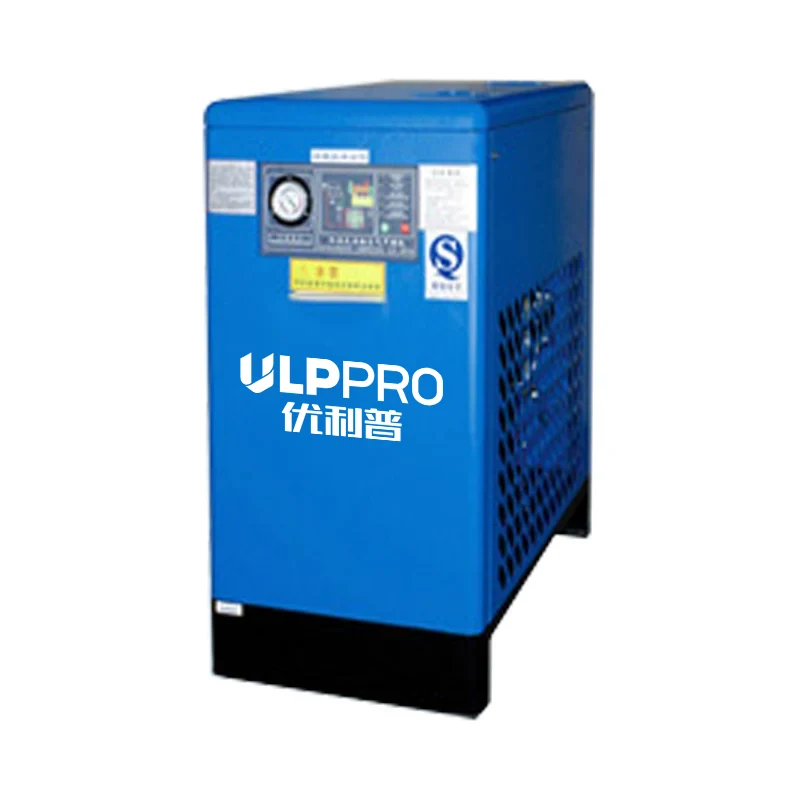
Proper sizing of dryers and filters
- Heat recovery systems (capturing compression heat for space heating or process pre‑heating)
Instead of bargaining hard on the compressor price, invest the effort in conducting a comprehensive site energy audit and select a supplier capable of delivering a turnkey system optimization solution.

This is not a "maybe" investment—it is a highly certain, low‑risk capital project with a clear, calculable payback. With electricity prices trending upward and carbon compliance costs increasing globally, the facility that completes its air compressor room upgrade to Grade 1 efficiency first gains a tangible, lasting competitive advantage in production cost.
Related News
- How Air Conditioning Screw Compressor Technology Supports Low-Carbon Cooling
- Why Does Compressed Air Demand Fluctuation Affect Compressor Selection?
- Variable Frequency Screw Air Compressor: How Energy-Saving Technology Is Changing Industrial Compressed Air Systems
- Why Two stage Compression Variable Frequency Screw Air Compressors Are Changing the Game
- Optimizing Industrial Efficiency: The Easy-Maintainable Two-Stage Permanent Magnet Variable Frequency Air Compressor
- The "Dual-Core" Era of Compressed Air: Why Two-Stage PM VFD Compressors Are Becoming the Energy-Saving Gold Standard
Leave me a message