The "Dual-Core" Era of Compressed Air: Why Two-Stage PM VFD Compressors Are Becoming the Energy-Saving Gold Standard
In industrial manufacturing, compressed air is often called the "second most important power source" after electricity. But this power doesn't come cheap—in many plants, air compressor systems can account for 10% to 50% of total electricity costs. With carbon neutrality goals tightening and energy prices soaring, turning your compressor room from an "energy guzzler" into a "efficiency champion" has become a strategic imperative.
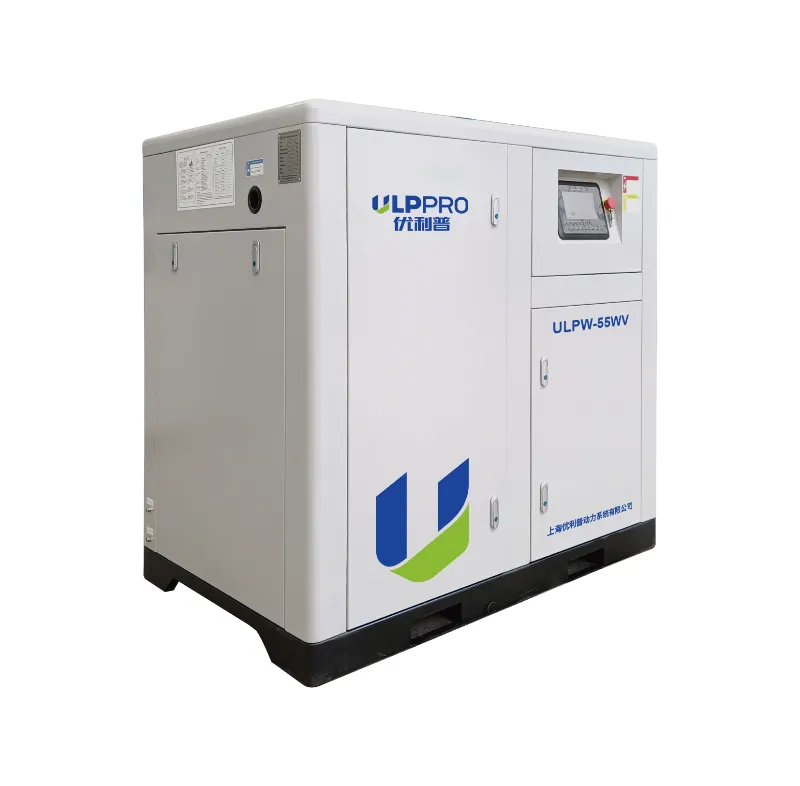
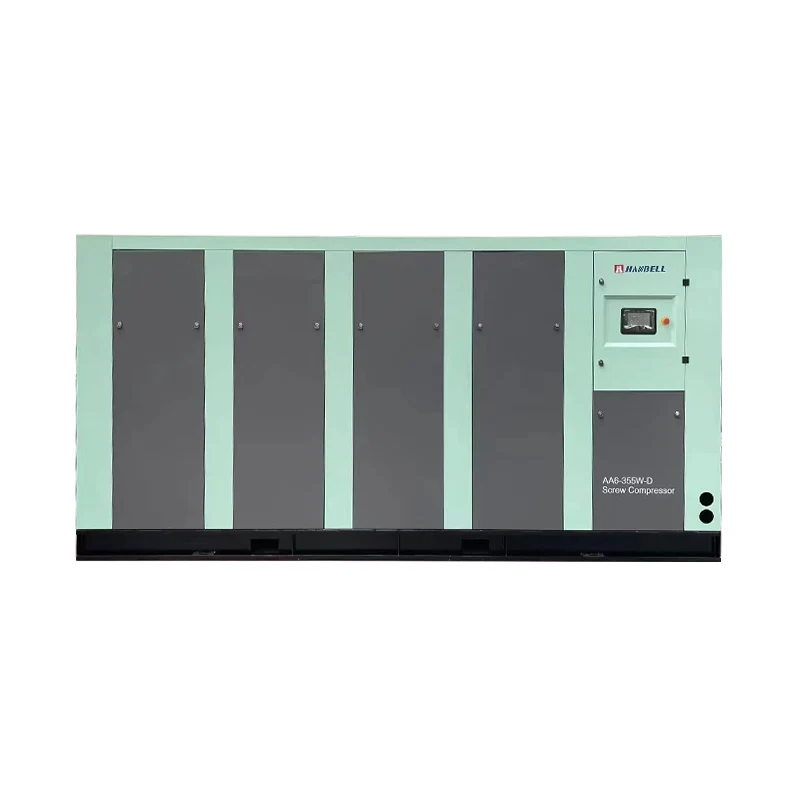
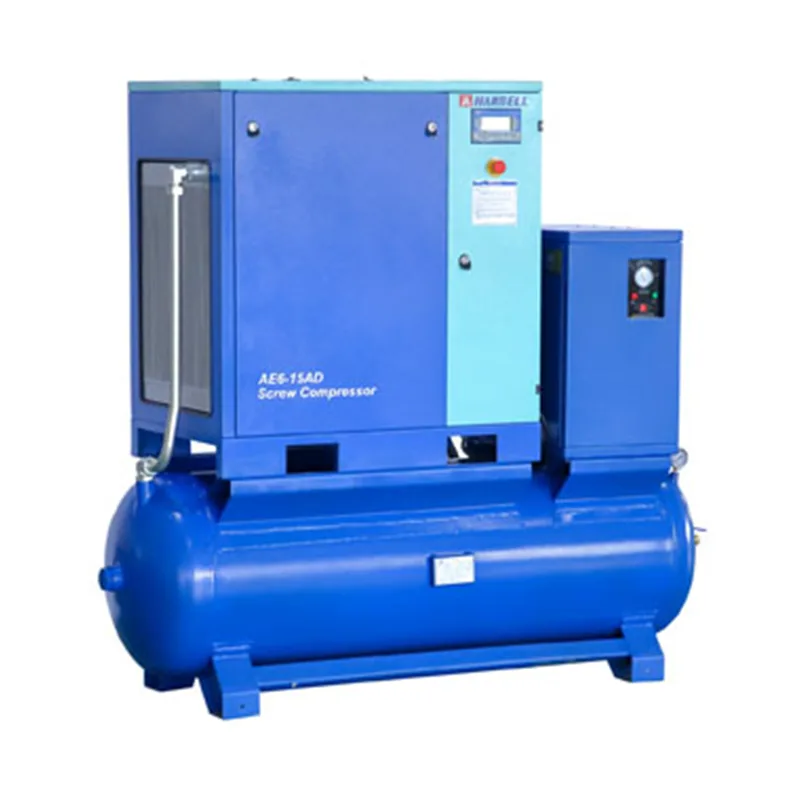
Enter the Two-Stage Permanent Magnet Variable Frequency Air Compressor—a technology that's rapidly reshaping the industry landscape. This isn't just a marketing gimmick or a simple hardware add-on; it's a fundamental rethinking of how we compress air.

Why Split Compression Into "Two Stages"?
Conventional single-stage compressors work like asking one worker to push air from atmospheric pressure all the way to 8 bar (or higher) in a single step. The compression ratio is huge, which leads to three inevitable problems:
-
Severe internal leakage—air slips back through clearances because the pressure differential is too high
-
Poor volumetric efficiency—you get less output for the same input power
-
Excessive heat generation—much of the electrical energy turns into wasted thermal energy
The two-stage approach is radically smarter: split the total compression ratio in half and let two stages work in sequence. For a 7 bar target, Stage 1 compresses to roughly 3 bar, the air passes through an intercooler to drop temperature, and Stage 2 takes it to the final pressure.
Here's why this changes the game:
1. Closer to Isothermal Compression = Real Energy Savings The lower the compression temperature, the less work required. Two-stage compression with intercooling brings the process much closer to the thermodynamic ideal of isothermal compression. The theoretical energy saving over single-stage is 5–8%, and in real-world conditions, it's often higher.
2. Drastically Reduced Internal Leakage The pressure differential per stage drops from roughly 5:1 (single-stage) to about 2.23:1 (per stage). With lower ΔP, less air slips back through rotor clearances. Volumetric efficiency improves significantly—this is where the "hidden" performance gain lives.
3. Longer Core Component Life Bearing loads scale with pressure differential. By sharing the load across two stages, bearing loads drop to about one-third of what a single-stage machine endures. That translates directly into longer maintenance intervals and extended service life.
PM VFD: The Force Multiplier That Makes It All Click
If the two-stage air-end is the "hardware," then Permanent Magnet Variable Frequency Drive is the "smart software" that unlocks its full potential.
In real-world factories, air demand is almost never constant. Traditional fixed-speed compressors run at full RPM regardless of demand, wasting enormous energy on unloaded running and pressure blow-off.
PM motors maintain near-constant efficiency across a wide speed range, and the VFD controller acts like a precision throttle—monitoring system pressure in real time and adjusting motor speed steplessly to match actual demand. The result? "Produce exactly what you need, exactly when you need it."
The synergy is remarkable. Independent tests show that under 40% part-load conditions, a PM VFD two-stage unit can save over USD 18,000 per year in electricity costs (based on a 160kW unit running 8,000 hours annually) compared to a conventional two-stage fixed-speed unit.
Bottom-line performance comparisons:
| Configuration | Energy Savings vs. Single-Stage Fixed-Speed |
|---|---|
| Single-Stage VFD | ~15–20% |
| Two-Stage Fixed-Speed | ~18–22% |
| Two-Stage PM VFD | ~25–32% |
And compared to a single-stage VFD? You're still looking at another 10–18% upside.
Real-World Impact: Where the Rubber Meets the Road
Case 1: Heavy Industry — Steel Manufacturing
A steel plant in Henan, China, replaced its aging fixed-speed compressors with high-efficiency two-stage PM VFD units. The projected annual savings: over USD 1.1 million in electricity costs, with a corresponding 12,000-ton reduction in CO₂ emissions. For continuous-production facilities, this isn't just cost-saving—it's profit-generating.
Case 2: High-Tech — Semiconductor Manufacturing
In semiconductor fabs and precision machining, air quality and pressure stability are non-negotiable. A Shenzhen-based semiconductor manufacturer struggled with pressure fluctuations and high discharge temperatures from their old single-stage units. After switching to a two-stage PM VFD solution, they achieved not only measurable energy reductions but, more critically, rock-solid, stable, and reliable air supply—essential for protecting million-dollar production lines from rejects and downtime.
Not a Silver Bullet—But Close for Most
Let's be honest: two-stage PM VFD compressors aren't the right choice for everyone.
-
If your plant runs at 100% full load, 24/7, with zero fluctuation, a high-efficiency two-stage fixed-speed unit may offer a lower initial capital outlay.
-
But if your air demand fluctuates—and most do, operating between 60% and 80% average load—then the two-stage + PM VFD combination is arguably the most cost-effective pathway to both decarbonization and operational savings today.
-
The One Question You Should Ask
Before you spec your next compressor, ask yourself this:
"How much of my annual electricity bill is already being wasted on unloaded running, blow-off, and inefficient partial-load operation—and could that waste alone pay for a new machine?"
If the answer makes you pause, then it's time to embrace the dual-core era.
Related News
- How Air Conditioning Screw Compressor Technology Supports Low-Carbon Cooling
- Why Does Compressed Air Demand Fluctuation Affect Compressor Selection?
- Variable Frequency Screw Air Compressor: How Energy-Saving Technology Is Changing Industrial Compressed Air Systems
- Why Two stage Compression Variable Frequency Screw Air Compressors Are Changing the Game
- Optimizing Industrial Efficiency: The Easy-Maintainable Two-Stage Permanent Magnet Variable Frequency Air Compressor
- Integrated Variable Frequency Screw Air Compressor: Transforming Compressed Air from a Cost Center into a Profit Driver
Leave me a message