Integrated Variable Frequency Screw Air Compressor: Transforming Compressed Air from a Cost Center into a Profit Driver
If your facility is still operating traditional fixed-speed compressors, your monthly electricity bills may already be signaling a quiet warning. Under the dual pressures of energy conservation and cost reduction, the integrated variable frequency screw air compressor—featuring permanent magnet synchronous motor technology—is rapidly gaining traction across global manufacturing sectors, steadily replacing conventional air compressor stations.
What Does "Fully Integrated" Mean?
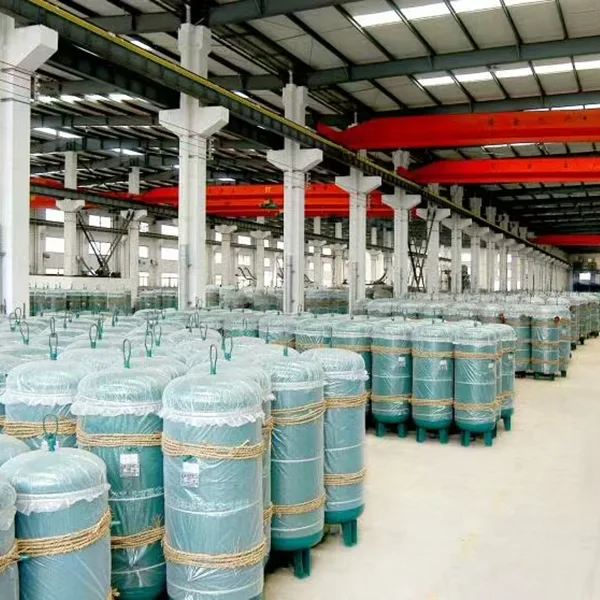
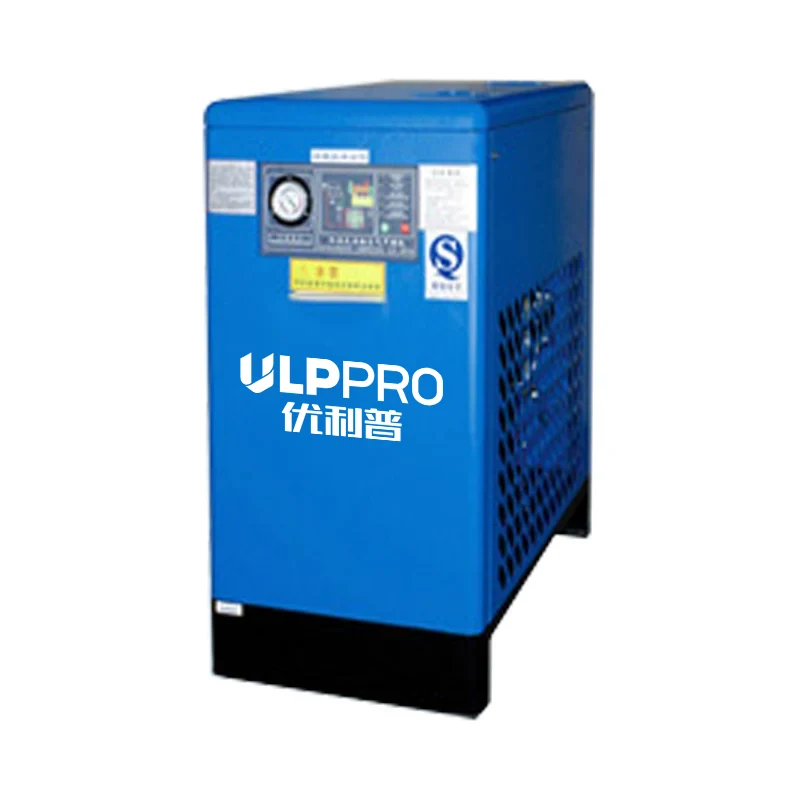
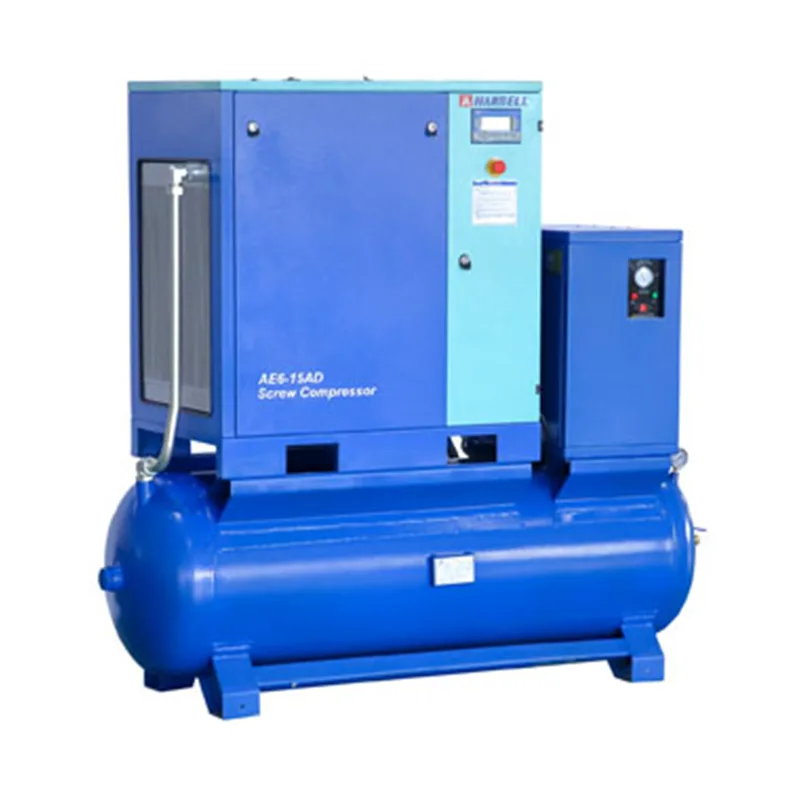
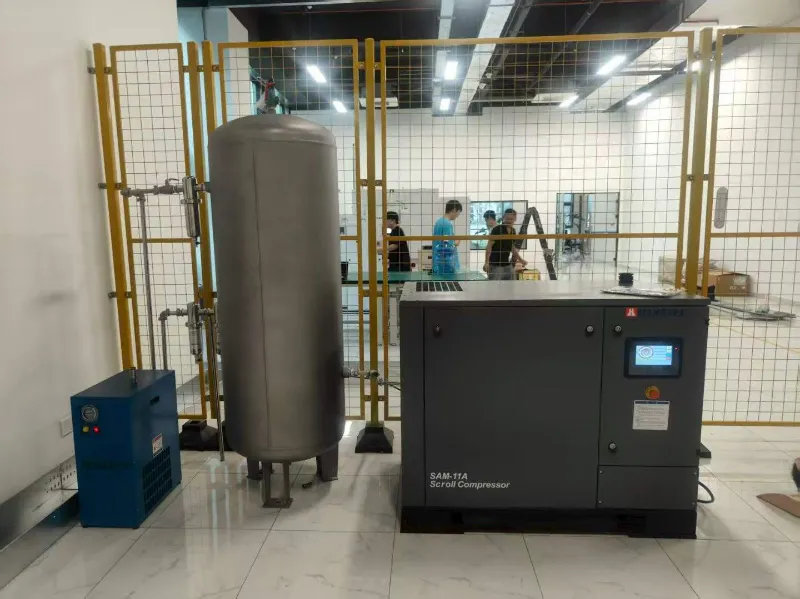
Traditional compressed air systems typically adopt a discrete architecture: the main compressor unit, refrigerated air dryer, air receiver tank, and multi-stage filters are all installed as separate components, interconnected through complex piping networks. This approach not only consumes substantial floor space but also suffers from persistent issues such as leakage at pipe joints and pressure drops along the delivery lines.
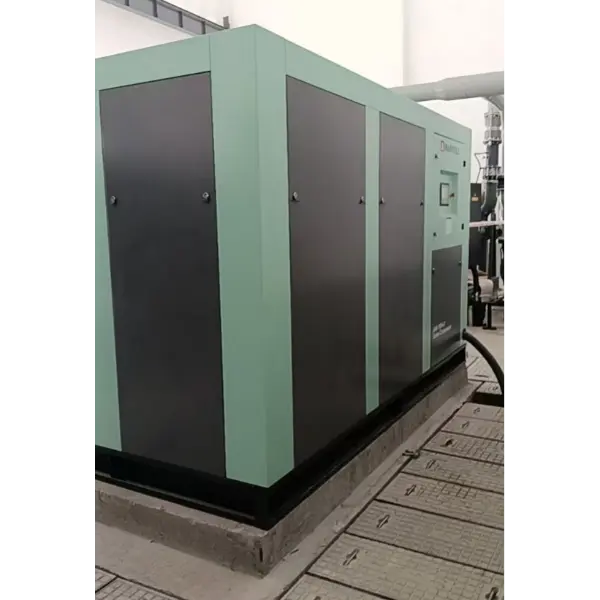
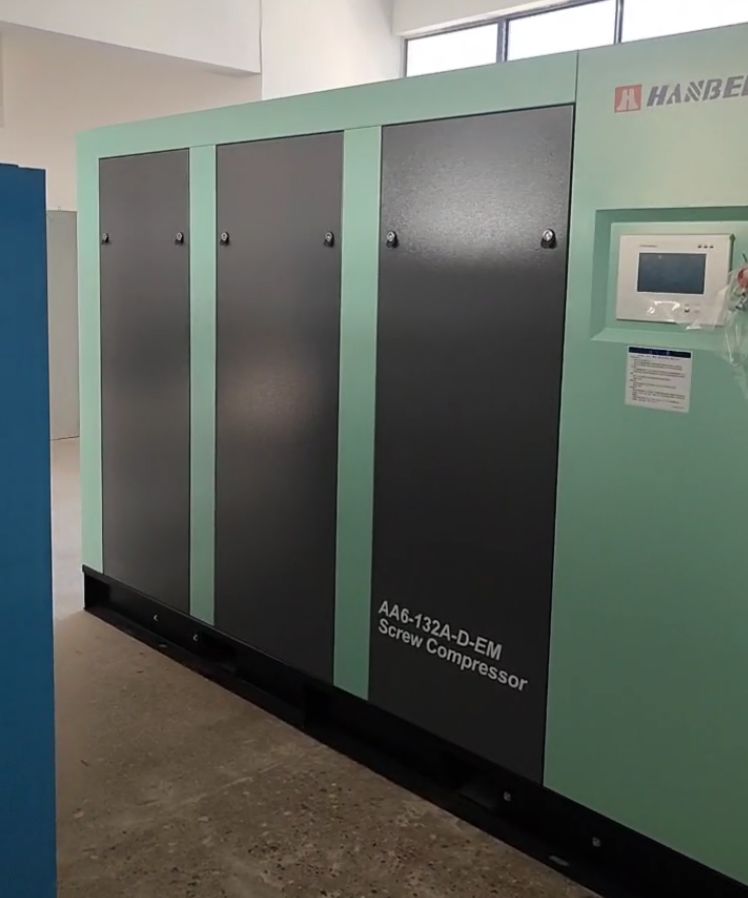
The fully integrated design, by contrast, consolidates all these components into a single, compact enclosure, forming a plug-and-play miniaturized compressed air station. End users are no longer required to procure, install, and interconnect dryers, filters, and tanks separately. The system arrives ready for operation—simply connect the power supply and the air distribution line, and it immediately delivers high-quality finished compressed air that meets end-use standards.

The Core of Energy Efficiency: PMS Motor and Variable Frequency Drive
The significant energy-saving advantage of this equipment stems from the synergy between two foundational technologies: the permanent magnet synchronous motor (PMSM) and the variable frequency drive (VFD).
Variable Frequency Drive: Eliminating Idle Energy Waste
Conventional fixed-speed motors, once started, run continuously at full rated speed regardless of downstream air demand. In contrast, VFD technology uses an embedded pressure transducer to continuously monitor the discharge pressure and adjust the motor's rotational speed in real time—decelerating when demand drops and smoothly accelerating when demand rises. This demand-responsive operating logic completely eliminates the substantial energy waste associated with the frequent load/unload cycling of fixed-speed machines. Field data consistently demonstrates that integrated variable frequency screw compressors can reduce electrical energy consumption by over 50% compared to conventional fixed-speed units.
Permanent Magnet Synchronous Motor: Sustained High Efficiency Across All Operating Points
Compared to traditional induction motors, permanent magnet synchronous motors require no excitation current, resulting in lower stator copper losses and higher overall energy conversion efficiency. More importantly, PMSMs maintain exceptional efficiency even at low speeds, where induction motors experience significant efficiency degradation. Industry benchmarks indicate an efficiency improvement of approximately 10% over asynchronous motors across typical operating ranges.
State-of-the-art models now commonly feature IE5 ultra-premium efficiency permanent magnet motors—the highest efficiency class defined by the International Electrotechnical Commission (IEC). When paired with integrated liquid-cooled drive technology, where coolant directly removes heat from the motor housing, the permanent magnets remain stable at optimal operating temperatures, fundamentally eliminating the risk of demagnetization under sustained high-load conditions. Additionally, complete systems can achieve IP65 ingress protection, offering superior dust-tightness and water resistance suitable for demanding industrial environments.
Comprehensive Performance Enhancements: Reliability, Stability, and Intelligence
The financial impact of unplanned downtime often far exceeds the cost of electricity itself. In this regard, the integrated design brings comprehensive, quantifiable improvements.
Heavy-Duty Bearing Configuration
To withstand the rigorous demands of screw compression cycles, modern integrated units employ heavy-duty bearing arrangements, selected and positioned based on the rotor's dynamic characteristics. This robust design significantly enhances the air-end's load-carrying capacity and operational smoothness, extending the unit's overhaul interval and overall service life.
Dual-Variable Frequency Control for Constant Temperature and Pressure
Advanced configurations adopt a dual-VFD scheme, controlling both the main motor and the cooling fan independently. By modulating the cooling fan speed in response to actual thermal load, the system maintains a stable discharge air temperature while eliminating excessive pressure head and associated parasitic energy losses. This design improves overall production efficiency by up to 30%, while reducing operational noise and saving an additional 3% of electrical consumption from the cooling system alone.
Integrated Human-Machine Interface (HMI) Control
Traditional setups require operators to manually control the compressor and the dryer through separate panels—a process prone to errors and inefficiencies. The integrated control system, however, centralizes all operations through a single touchscreen HMI that provides unified start/stop control and comprehensive parameter monitoring for both the compressor and the drying unit. This intuitive interface substantially reduces operator training requirements and minimizes the risk of misoperation.
IoT-Enabled Smart Maintenance
In line with the Industry 4.0 paradigm, modern integrated compressor packages generally support remote IoT monitoring. Users can access real-time operational data—including pressure, temperature, current draw, and runtime status—through mobile applications or web-based dashboards. The accumulation of operational data enables predictive analytics, allowing maintenance teams to perform predictive maintenance based on actual equipment condition rather than fixed schedules. This capability significantly reduces unscheduled downtime and extends the asset's useful life.
Economic Justification: Quantifiable Return on Investment
Beyond theoretical advantages, empirical data from real-world industrial retrofits provides compelling evidence:
-
Replacing a single-stage fixed-speed unit with a two-stage permanent magnet variable frequency alternative has yielded annual electricity savings exceeding 200,000 kWh, paired with a production efficiency increase of approximately 30%.
-
Upgrading aging compressor stations has resulted in annual energy savings of roughly 180,000 kWh and a 15% improvement in overall equipment effectiveness (OEE).
These figures translate directly into reduced operating costs and enhanced competitiveness. For manufacturing facilities with fluctuating air demand—particularly those with uneven consumption across shifts or production cycles—the simple payback period for this technology typically ranges between 1.5 and 2.5 years, making it a highly attractive capital investment.
The integrated variable frequency permanent magnet screw air compressor represents far more than an incremental equipment upgrade. It signifies a systemic transformation of the compressed air system: from discrete assembly to fully integrated design, from fixed-speed operation to demand-driven variable output, and from manual inspection routines to intelligent, data-driven asset management. With its compact footprint, lower specific energy consumption per unit of output, superior air quality, and smarter operational oversight, this technology converts compressed air—long regarded as an unavoidable utility cost—into a measurable, manageable contributor to the bottom line. For any modern manufacturing enterprise pursuing energy optimization and lean production, this is a technical direction worthy of serious evaluation.
Related News
- How Air Conditioning Screw Compressor Technology Supports Low-Carbon Cooling
- Why Does Compressed Air Demand Fluctuation Affect Compressor Selection?
- Variable Frequency Screw Air Compressor: How Energy-Saving Technology Is Changing Industrial Compressed Air Systems
- Why Two stage Compression Variable Frequency Screw Air Compressors Are Changing the Game
- Optimizing Industrial Efficiency: The Easy-Maintainable Two-Stage Permanent Magnet Variable Frequency Air Compressor
- The "Dual-Core" Era of Compressed Air: Why Two-Stage PM VFD Compressors Are Becoming the Energy-Saving Gold Standard
Leave me a message